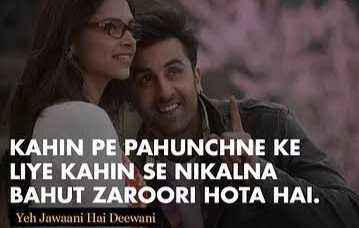
It’s Not Always Plain Vanilla

It’s Not Always Plain Vanilla

The fruits of this newsletter lie in the actions you take and the reflections you create about your life.


Thoughtful Thought

“Believing what to believe is also a belief.”- Dr Mehernosh J Randeria


NLP Quote Corner

“The easier you can make it inside your head, the easier things will be outside your head.”- Richard Bandler


One Minute NLP – “There are no unresourceful people, only unresourceful states”

State, in NLP, refers to our emotional state of being at any point of time. 

Resources, in NLP, refer to all the solutions that we believe we need that would help us in any situation. These solutions may be in the form of external resources (like help from others), or they may even be internal resources (like our beliefs, skills, talents, wisdom, knowledge, intelligence, etc). 

At times, there are situations where we are not able to access these resources which are within ourselves. And it is at these times that we often end up labeling ourselves in a disempowering or limiting manner – e.g.: “I shout at my colleagues for no reason”, “I always goof up in public speaking”, etc.

“There are no unresourceful people, only unresourceful states” What this particular presupposition of NLP reminds us is that people are not unresourceful, but the state in which they are at that moment is not appropriate for them to access these resources. In the above examples, 

Behaviour = shouting at colleagues for no reason; Unresourceful State = anger

Behaviour = Goof up in public speaking; Unresourceful State = nervousness

A lot of NLP tools and techniques are focused on how to be aware of your “state” and how to change your state from an unresourceful one to a more resourceful one, so that you can continue to perform at the peak of your potential whenever needed.

You can empower yourself with the tools and techniques of NLP by joining the complimentary weekend course here: www.learnnlp.in


Meta- Magic – It’s Not Always Plain Vanilla

A complaint was received by the Pontiac Division of General Motors:

“This is the second time I have written to you, and I don’t blame you for not answering me, because I sounded crazy, but it is a fact that we have a tradition in our family of Ice-Cream for dessert after dinner each night, but the kind of ice cream varies so, every night, after we’ve eaten, the whole family votes on which kind of ice cream we should have and I drive down to the store to get it. It’s also a fact that I recently purchased a new Pontiac and since then my trips to the store have created a problem…. You see, every time I buy a vanilla ice cream, when I start back from the store my car won’t start. If I get any other kind of ice cream, the car starts just fine. I want you to know I’m serious about this question, no matter how silly it sounds “What is there about a Pontiac that makes it not start when I get vanilla ice cream, and easy to start whenever I get any other kind?””

The Pontiac President was understandably skeptical about the letter but sent an Engineer to check it out anyway. The Engineer intentionally sought the post-dinner time to meet the customer, so he could experience the problem first-hand. It was vanilla ice cream that night and, sure enough, after they came back to the car, it wouldn’t start.

The Engineer returned for three more nights. The first night, they got chocolate. The car started. The second night, he got strawberry. The car started. The third night he ordered vanilla. The car failed to start. The Engineer was flabbergasted. Could a car ever be allergic to Vanilla?

“Is Vanilla really the problem?” He asked himself and that’s when he began to shift his attention to other aspects and began taking note of time of day, type of gas used, time to drive back and forth, etc. 

Within few days, he had a clue: the man took less time to buy vanilla than any other flavor. Why? The answer was in the layout of the store. Yes! The ice cream store was arranged in such a way that Vanilla was the quickest accessible flavour at the front of the store. All other flavours were kept in the back of the store at a different counter where it took considerably longer to check out the flavour.

Now, the question for the Engineer was why the car wouldn’t start when it took less time. Eureka – Time was now the problem – not the vanilla ice cream!!!! The engineer quickly came up with the answer: “vapour lock”.

It was happening every night; but the extra time taken to get the other flavours allowed the engine to cool down sufficiently to start. When the man got vanilla, the engine was still too hot for the vapour lock to dissipate!

My question to you is: What areas of your life need a deeper look beyond just a plain vanilla approach?

Hook From The Book

“You have brains in your head. You have feet in your shoes. You can steer yourself in any direction you choose. You’re on your own. And you know what you know. And YOU are the one who’ll decide where to go…”- Dr. Seuss, Oh, the Places You’ll Go!


Movie Motivation

“…Toh kaisi lagi kahani? Ending khaarab hain an? Toh koi baat nahi, apni kahani hain, ending change kar lenge.” This dialogue from the movie Tamasha (translated to: “So how did you like the story? Ending is bad, isn’t it? No problem, it is our story, let’s change the ending.”) A very impactful dialogue that reminds us that we are the writer of our own story, and we have the power to choose how our story will end.


This Week’s Winning Post

Questions you can ask for Clarity


See you next week!

Thoughtfully Yours,

Mehernosh Randeria

You Are Not The Apple You Sell

You Are Not The Apple You Sell

Let’s dive into yet another episode of NLP Around You hitting the bull’s eye to stir up your thoughts.


Thoughtful Thought

“Focus on improving yourself, rather than proving yourself.”- Dr Mehernosh J Randeria


NLP Quote Corner

“The best thing about the past is that it’s over. The best thing about the future is that it is yet to come. The best thing about the present is that it is here and now.”- Richard Bandler


One Minute NLP – Auditory Digital

While we have previously understood that all thoughts are stored in the forms of internal representations, these internal representations are not just limited to the 5 senses of visual (sight), auditory (sound), kinaesthetic (touch), olfactory (smell) or gustatory (taste). There is a 6th representational system as well. This is when instead of activating our sensory-related thinking, we begin to apply logic and analysis. This in NLP is called the “Auditory Digital”, represented often by an internal dialogue using rationalisation and computation processes in the head. 

For example, a proposal put forth in a meeting is processed differently by different participants. The person responding “This looks good”  pictures the idea with the visual representation system. “This sounds good”  tells you there is an auditory representation system at work. The person who is processing the information using auditory-digital would probably respond with “This makes sense” or “Let me understand this better.”


Meta- Magic – You are not the apple you sell

Imagine you start a wonderful fruit store, and you decide to sell apples. With a lot of passion, you make all the necessary efforts to lay out the store in a way that the best of the best apples are displayed for the customers to buy at the most reasonable prices in the market.

Now, let’s say a prospect walks into your store and looks around at all the apples. You excitedly show him the best of the apples. He doesn’t show any interest. You explain how apples are best for his health. He is not interested. You explain to him about all the efforts you have made in logistically bringing the fresh apples from the farms. He is still not interested. You offer a great price discount for the day. Even that doesn’t interest him.

He finally walks away without buying anything. How would this make you feel? Rejected? Dejected? And yes, most people do take rejection personally!

Now, let me tell you why he was not interested. Because he was looking for oranges, and you didn’t have them. He was not rejecting you. He was rejecting what you had to offer, only because what he wanted was different from what you were offering. 

My question to you is: The next time, when rejection knocks at your door, what would be the first thing you would say to yourself? How would you ensure that you do not take any rejection personally?


Hook From The Book

“Home is not where you land, home is where you launch. You can’t pick your home any more than you can choose your family.”- An American Marriage by Tayari Jones


Movie Motivation

This week’s dialogue is contributed by Dr. Hemant Chauhan


“Great men are not born great. They grow great.” This dialogue from The Godfather reminds us that even the sky is not the limit when one decides to achieve levels of greatness.


This Week’s Winning Post

Where are you casting your vote today?


Finally, here is a reminder to cast your vote once again for the Coach Awards where I have been nominated for the Best Executive Coach. The voting lines close on 10th September 2023.

Vote Here


See you next week!


Thoughtfully Yours,

Mehernosh Randeria

Are You Letting The Bull Get Away?

Are You Letting The Bull Get Away?

Thank you for leaving no stone unturned in voting for me for the Award of the Best Executive Coach. In case you are yet to cast your vote, here is the link: https://www.coachawards.com/executivecoach/dr.-mehernosh-j-randeria

Thoughtful Thought

In order to invite knowledge as a guest, keep the doors of learning always open.”- Dr Mehernosh J Randeria

NLP Quote Corner

Wisdom comes from experience, but experience is not enough. Experience anticipated and experience revisited is the true source of wisdom.”- Richard Bandler

One Minute NLP – Submodalities

Imagine that you are watching a movie. The movie is playing on a big screen in front of you. The image is bright and clear, and the sound is loud and crisp. You are completely immersed in the movie, and you feel all of the emotions that the characters are feeling.

Now, imagine that you change certain elements of the movie, without actually changing the content of the movie.

– You make the image smaller and dimmer.

– You also turn down the sound.

The movie is still playing, but it is not as immersive as it was before. You are no longer feeling as much of the emotions that you could relate to earlier.

These properties of visual and audio effects of the movie are the things that make it real to you. They are the properties that make you feel the emotions of the characters. These properties are what we call as “Submodalities” in NLP. By changing the submodalities, you can change the way you experience the movie.

The same thing is true for our thoughts and feelings. All our thoughts are represented by one of these representational systems:

  • Visual: We see things in our mind’s eye.
  • Auditory: We hear things in our mind’s ear.
  • Kinesthetic: We feel things in our body.
  • Olfactory: We smell things in our mind’s nose.
  • Gustatory: We taste things in our mind’s mouth.
  • Digital: We think in words, numbers and logic.

Each of the above representational systems has its own submodalities. For example, some of the submodalities of the visual system include:

  • Color: Is the image black and white or in color?
  • Brightness: How bright is the image?
  • Size: How big is the image?
  • Location: Where is the image located in your mind’s eye?
  • Clarity: How clear is the image?
  • Movement: Is the image moving or still?

The submodalities of our thoughts and feelings are the things that make them real to us. They are the things that make us feel the emotions that we are feeling. By changing the submodalities of our thoughts and feelings, we can change the way we experience them. We can make them more positive or more negative, more intense or less intense. We can even make them disappear altogether.

Meta- Magic – Are You Letting The Bull Get Away?

Raghu, the village lad fell in love with the beautiful daughter of a wise old farmer. The farmer agreed to get Raghu married to his daughter, but he laid down one condition: “All you need to do is to catch the tail of any one of the three bulls in my herd. If you succeed in doing so, my daughter is all yours.”

On the day of the challenge, Raghu stood in the middle of the field and waited for the bulls to be released. The first bull appeared to be so big and ferocious, that Raghu turned and ran away, resolving to tackle the second bull.

The second bull was even bigger and more ferocious than the first, which scared Raghu even more, making him resolve to now catch the tail of the third bull.

Fortunately, the third bull was old and feeble. Raghu was relieved to see this, and he immediately set his pace and positioned himself in such a way that he could grab the bull’s tail, but alas! This bull had no tail!

My question to you is: Are you skipping chances before chances begin to skip you?

Hook From The Book

“We accept the love we think we deserve.” ― Stephen Chbosky, The Perks of Being a Wallflower

Movie Motivation

This week’s Movie Motivation is contributed by Monika Shekhawat.

“Har team main bas ek hi gunda ho sakta hai, aur is team ka gunda main hoon” from the movie Chak De India. Translated to: “Every team has only one goon, and the goon of this team is Me.”

How Monika relates to this dialogue: I am the ruler of my life, no one else can dictate me what to do or not. Not influenced by negative comments or people who try to pull me down.

This Week’s Winning Post

What is Productivity according to you?

See you next week!

Thoughtfully Yours,

Mehernosh Randeria

What Stones are You Picking?

What Stones are You Picking?

With heartfelt gratitude, today’s newsletter contains a cherry-picked surprise news that I am so excited to share with you.

Thoughtful Thought

If love is blind, make self-love your walking stick.”- Dr Mehernosh J Randeria

NLP Quote Corner

The person most in control is the person who can give up control.”- Frederick Salomon Perls (Fritz Perls)

One Minute NLP – The 4 Stages of Learning

If learning is the seed, awareness is the fertilizer. And here I am referring to the awareness about the stage of learning you are at, with respect to every skill or behaviour or ability.

Let us explore the four stages of learning.

Stage 1: Unconscious Incompetence (UI): “I don’t know that I don’t know”

– This includes all the things whose existence you are not even aware of. And thus, you don’t even know that you don’t know it.

For example, as an infant, even before you learned to ride a bicycle, there was a time when you may not have even seen a bicycle.

Even today, as an adult, there may still be several things, that we don’t even know, exist around. With respect to these elements, we are in the stage of UI.

Stage 2: Conscious Incompetence (CI): “I know that I don’t know”

– This applies to all those things whose existence you are well aware of, and yet conscious about the fact that you don’t know how to perform or operate them.

Continuing the example of the bicycle, as an infant sees other kids riding a bicycle, there is now an awareness of its existence and also an awareness of not knowing how to ride it.

As of today, what are the various things in your life that you are aware of not knowing much about it? Some examples could be a foreign language, a musical instrument, robotics, scuba diving or other such activities which you have chosen not to learn or get further in depth of.

Stage 3: Conscious Competence (CC): “I know that I know”

– This applies to all those things whose existence you are well aware of, and yet conscious about the fact that you know how to perform or operate them.

When the child starts riding the bicycle, the child is now aware of the learning process. This is the stage that involves practicing, repetitions, conscious efforts, and even mistakes which act as a part of learning.

What are those aspects of your personal and professional life where you are learning by practicing, by doing, and consciously stacking up the knowledge for future implementation? Some examples could be a foreign language that you are currently learning, a musical instrument you are practicing, a profession or course that you are undergoing to master your skills, etc.

Stage 4: Unconscious Competence (UC): “I don’t know that I know”

– Something which is so naturally imbibed in you that it becomes an unconscious habit.

Once the child has learned how to ride the bicycle, it eventually reaches a stage when the moment you get on the bicycle you ride across distances without even being aware that you are balancing, pedaling, and applying all the various nitty-gritties in such a way that is so naturally and unconsciously happening at the moment.

What are those skills or abilities which are at your level of UC? For example: driving a car, photography, being naturally kind and trustworthy to people. These are usually those skills or abilities where other people compliment you and you wonder – what’s the big deal? That’s because it is a big deal for them, whereas for you it is simply automatic.

When you are aware of the stage of your learning, it becomes easy to sail your boat into deep waters as you can map your journey about how and when you will take the stride.

Meta- Magic – What Stones Are You Picking?

A young man named Hiroshi was perplexed and overwhelmed by his never-ending trail of thoughts. He could never attain the state of calm due to random thoughts constantly erupting out of nowhere.

He got to know about a monk who lived on the outskirts of the town near the river and immediately set off hoping to get a solution. He explained to the monk, “Sir, how do I empty my mind and attain peace? It has become a dump yard of thoughts as if my mind is being continuously pelted with an array of stones. I am disconnected from myself. Please help.”

The monk in response turned his head towards the river and replied while throwing a stone in the calm river, “What did you see just happening?”

Hiroshi replied, “Well, the calm river got some ripples once you threw the stone, but after some time the ripples settled and the calmness of the water resumed.”

The monk smiled, “Our mind is this river and thoughts are the stones. It will become calm after some time but only if you stop throwing more stones in it.”

Hiroshi understood, yet he could not decipher, how to stop these stones, so he mustered up courage and asked, “Sir, how do I stop these stones?”

The monk asked him to follow him for a long walk. Hiroshi was asked to pick up the stones along the way, look at them closely, and describe each stone to the monk. After picking a handful, Hiroshi felt the weight and expressed his desire to put the stones down.

The monk replied, “This is where you need to draw the line, Hiroshi. Instead of picking every stone (thought) coming your way, you need to mindfully choose the stone or the thought that you would entertain. Each time you pick a stone, ask yourself- Is this stone going to help me to be calmer and happier or not? You will have your answer.”

My question to you is: Are you aware of the number of stones (thoughts) you pick every day? How do you make sure that you are picking the right stone?

Hook From The Book

“It is a curious thought, but it is only when you see people looking ridiculous that you realize just how much you love them.”- An Autobiography by Agatha Christie

Movie Motivation

This week’s movie motivation is contributed by Karzan.

Context: The movie revolves around this magical artifact called the “Dragon Scroll” which is said to contain secrets of the universe that would grant unlimited power and knowledge to whoever reads it. But when Po (the Panda) is chosen to read it, he finds out that it is just a blank scroll made of some reflective paper. This leaves him and his friends confused and perplexed.

Later in the movie, Mr. Ping drops the truth bomb on Po that there is in fact no secret ingredient! It is just the people’s belief that makes them think the soup is special. This leads Po to uncover the true meaning of the Dragon Scroll. That is, there is no secret to unlocking unlimited power and knowledge, it’s you who has the ability to unlock unlimited power and knowledge.

This Week’s Winning Post

From one Author and NLP Trainer to another

Surprise News of the Week

I am delighted to share that I have been nominated for the award of Best Executive Coach 2023. The winners will be determined by public votes and evaluation by a Jury Panel of renowned industry experts. You can cast your vote here: https://www.coachawards.com/executivecoach/dr.-mehernosh-j-randeria Also, please do share this with all your contacts with a request to cast their vote too. Thank you for all your love! See you next week!

Thoughtfully Yours,

Mehernosh

What a Cherry Blossom Can Teach Us

What a Cherry Blossom Can Teach Us

The last 2 episodes would have allowed you to reflect on your sources of strength and power, which includes NLP Around You.

Thoughtful Thought

“Life is a tightrope, where rather than avoiding to fall, find your balance.”- Dr Mehernosh J Randeria

NLP Quote Corner

“The currency of living is how you spend the moments of your life.”- Richard Bandler

One Minute NLP – 5 Principles to achieve a successful outcome

In NLP, a Goal or End-result is often referred to as an Outcome. Here are the 5 Principles to achieve a successful outcome.

1. Know Your Outcome Precisely

If your outcome/goal is not clear, it is not a goal, but just a desire. A well-defined goal is like a well-nourished body, infused with all the needed vitamins to live vitally. A clearly defined goal/outcome is not about knowing just “What” you want, but also “why” you want it and also “by when” you are going to accomplish it.

2. Be The Action Hero

If a goal without clarity is mal-nourishment, a goal without action is a body without oxygen. The actions you will take are just one side of it, but how much action to take every day and how much to delegate, and how to get going is where one needs to shed light on.

3. Sense Sensibly (have sensory acuity)

Notice the results you get from your actions. Are your actions taking you closer, or further away, from your goal? Consider knock-on and delayed effects as well as the obvious, immediate ones.

4. Be flexible

If what you have been doing isn’t working, do something else. If plan A is not working, choose plan B. Change plans, not goals. If a habit is not working, change the habit. If the environment is not conducive, tweak it. If your own identity is a roadblock, then modify it and add a new one. Do whatever it takes, till you make it a success. Have a 3D view of solutions.

5. Work from the psychology and the physiology of excellence

Mind and body are one system. Your breathing, posture and general physical state affect your thoughts and emotions. Get yourself into the best possible state – physically, emotionally, mentally – and then take action.

Meta- Magic – What can we learn from a cherry blossom?

The wisest monk of a village in the Himalayas was once approached by a young man, who was fed up and overwhelmed by the unpredicted tapestry of life and by the unforeseen events in life, and was now seeking peace.

“Oh, Wisest Monk! I have heard a lot about you. Could you please tell me how can I get peace?” Asked the young man with the warmest and humblest smile.

The monk asked the young man to take a walk with him. They both walked in silence while the young man kept his patience alive. After reaching under a gigantic cherry tree, the monk stopped. There were many cherry blossoms fallen on the ground. He picked one, held it closer, and smiled while looking at the young man.

“Oh young man! Tell me what can you learn about peace from this cherry blossom?” asked the monk. The young man was puzzled and said he never thought that a cherry blossom can teach something about peace and he waited for the monk’s answer.

“This cherry blossom is detached from its existence. It sprouts at its own pace and grace, and lightens up the beauty around it. When the right time comes, it surrenders to dwindle down without worrying or complaining, which allows the moment to sink in. Peace can be sought in graceful acceptance of things around us. Are you ready to be a cherry blossom now?”

The young man was speechless and after letting the insightful guidance sink in, he just nodded with a smile.

Hook From The Book

“It is only with the heart that one can see rightly; what is essential is invisible to the eye.” — The Little Prince by Antoine de Saint-Exupéry

Movie Motivation

Today’s movie motivation is contributed by Kadambari Singhania

No alt text provided for this image

“Arre beta… tum jaise talented bachche hote na… soda mein iss bubbles ki tarah hote hain… Woh aise hi upar aate hain, apne aap… unhe koi nahi rok sakta.” (translated as: Talented children like you, are like bubbles in soda, they come up by themselves, nobody can stop them.). This dialogue from Secret Superstar uses a wonderful metaphor to describe that talent cannot be suppressed, just like the bubbles in a soda.

And that’s yet another interesting example of finding magic in the mundane with the power of metaphors.

Blog of the Week:

On the occasion of Independence Day this week, here’s my latest blog on how you can release your inner freedom with NLP.

http://w3coach.com/independence-day-with-nlp/

See you next week!

Thoughtfully Yours,

Mehernosh Randeria


Warning: Undefined array key "extension" in /home/wcoachco/public_html/wp-content/themes/Divi/epanel/custom_functions.php on line 1471
Whom are you Giving Your Power to?

Whom are you Giving Your Power to?

The next time you are asked to use your full strength, remember to include the wisdom from this newsletter as your strength too.

Thoughtful Thought

“Manifestation is nothing, but mind, body and soul working together for one mission.”- Dr Mehernosh J Randeria

NLP Quote Corner

“People always tell me with absolute certainty that they don’t trust themselves.”- Richard Bandler

One Minute NLP – What is NLP?

A boy asked his mother, ‘What’s NLP?’

His mother said, ‘I will tell you in a moment, but first you have to do something so you can understand. See your granddad over there in his chair?’

‘Yep,’ said the boy.

‘Go and ask him how his arthritis is today.’

The boy went over to his grandfather. ‘Granddad,’ he said, ‘how’s your arthritis today?’

‘Oh, it’s a bit bad, son,’ replied the old man. ‘It’s always worse in damp weather. I can hardly move my fingers today.’ A look of pain crossed his face.

The boy went back to his mother. ‘He said it was bad. I think it hurts him. Are you going to tell me what NLP is now?’

‘In a minute, I promise,’ replied his mother. ‘Now go over and ask Granddad what was the funniest thing that you did when you were very young.’

The boy went over to his grandfather. ‘Granddad,’ he began, ‘what’s the funniest thing I ever did when I was very young?’

The old man’s face lit up. ‘Oh,’ he smiled, ‘there were lots of things. There was the time when you and your friend played Father Christmas and sprinkled talcum powder all over the bathroom pretending it was snow. I laughed – but I didn’t have to clean it up.’ He stared into the distance with a smile.

‘Then there was the time I took you out for a walk. It was a lovely day and you were singing a nursery rhyme you had just learned. Loudly. A man went past and gave you a nasty look. He thought you were being too noisy. He asked me to tell you to be quiet. You turned round and said to him, “If you don’t like me singing, you can go and boil your head.” And carried on even louder. . .’

The old man chuckled. The boy went back to his mother. ‘Did you hear what Granddad said?’ he asked.

‘Yes,’ his mother replied. You changed how he felt with a few words. That’s NLP’.

– An excerpt from NLP Workbook by Joseph O’Connor

Meta- Magic – Whom do you give your power to?

A prosperous King couldn’t believe his luck when he received a lunch invitation from his neighbourhood King, who he was always in awe of, and seriously wanted to emulate, for the kind of success that this neighbourhood King had achieved.

“This is a golden chance to learn through his structure. I should make note of every detail about his kingdom. How can I change my people and my surroundings, so that I can scale up my kingdom’s prosperity like him? I should keep taking notes.” The King murmured to himself while commuting towards the neighbourhood kingdom.

Right from the moment he entered the neighbouring Kingdom, he tried to take note of everything – from the behaviour of gatekeeper, to farmers working and potters moulding their clays, and women and children. Everytime he scanned every human, he became more confused, as he could not spot any difference. They all were as happy and as warm as his folks were.

He finally made it to the palace and once the feast was served, he noticed a fly in both his and the host King’s soup bowls. He immediately sprang into action and raised his voice and shouted at the waiter who served it.

The waiter was frightened, taken aback, and immediately went to replace it. In the haste of doing all this, he forgot to apologize, which enraged the King even more. Resultingly, the King said to the host King, “What kind of people work for you? You should immediately kick him out of this royal, prestigious job.”

The host King, who was then silently taking out the fly from his own soup, looked upto the guest King and smiled. Instead of replying to him, he first called the waiter and said, “Raman, I know it is a rare mistake. Can you please get me another bowl?”  The waiter immediately apologised with all his heart and got him another bowl. His eyes were pleading the King already and there was guilt reflecting there.

The guest King was perplexed and asked the host King how he could not react to such enraging situations. The host King replied, “I did not react. I responded so that I don’t give a fly so much power over my emotions that it begins to control me. Calmness has been my key to unlocking many doors of success.”

The guest King understood the change he needed to make to prosper. It was in making a choice between reacting and responding.

My question to you is: Who are you giving your power to? Are you allowing the situations around you to control your emotions? Or do you choose to respond instead of react?

Hook From The Book

No you don’t understand. You’re not a wave, you’re part of the ocean.” Tuesdays with Morrie by Mitch Albom

Movie Motivation

This week’s movie dialogue is contributed by Dr. Hemant Chouhan

No alt text provided for this image

It is so simple to be happy but it is so difficult to be simple. This profound dialogue from the movie Bawarchi is an ode to the original quote from Nobel Laureate Rabindranath Tagore. This clip on YouTube (with subtitles) explains the context as well as the deeper meaning of this line. (Incidentally, the subtitle wrongly attributes this quote to Ranjan instead of Rabindranath Tagore, while it is rightly mentioned in the actual clip.)

This Week’s Winning Post:

The 7 Rules of Life

See you next week!

Thoughtfully Yours,

Mehernosh Randeria

Pin It on Pinterest